“Operational transformation” is a term that has been diluted by overuse in business consulting and technology marketing. In the context of protein and seafood manufacturing, it has a specific and practical meaning: the transition from operational systems that create risk and limit growth to systems that enable compliance, visibility, and scalability as default capabilities.
This article describes what operational transformation actually looks like in protein manufacturing — the before state, the transition, and the operational reality on the other side.
The Before State — What Most Protein Manufacturers Are Running
The before state in protein manufacturing is remarkably consistent across companies of different sizes and market segments. Its defining characteristics:
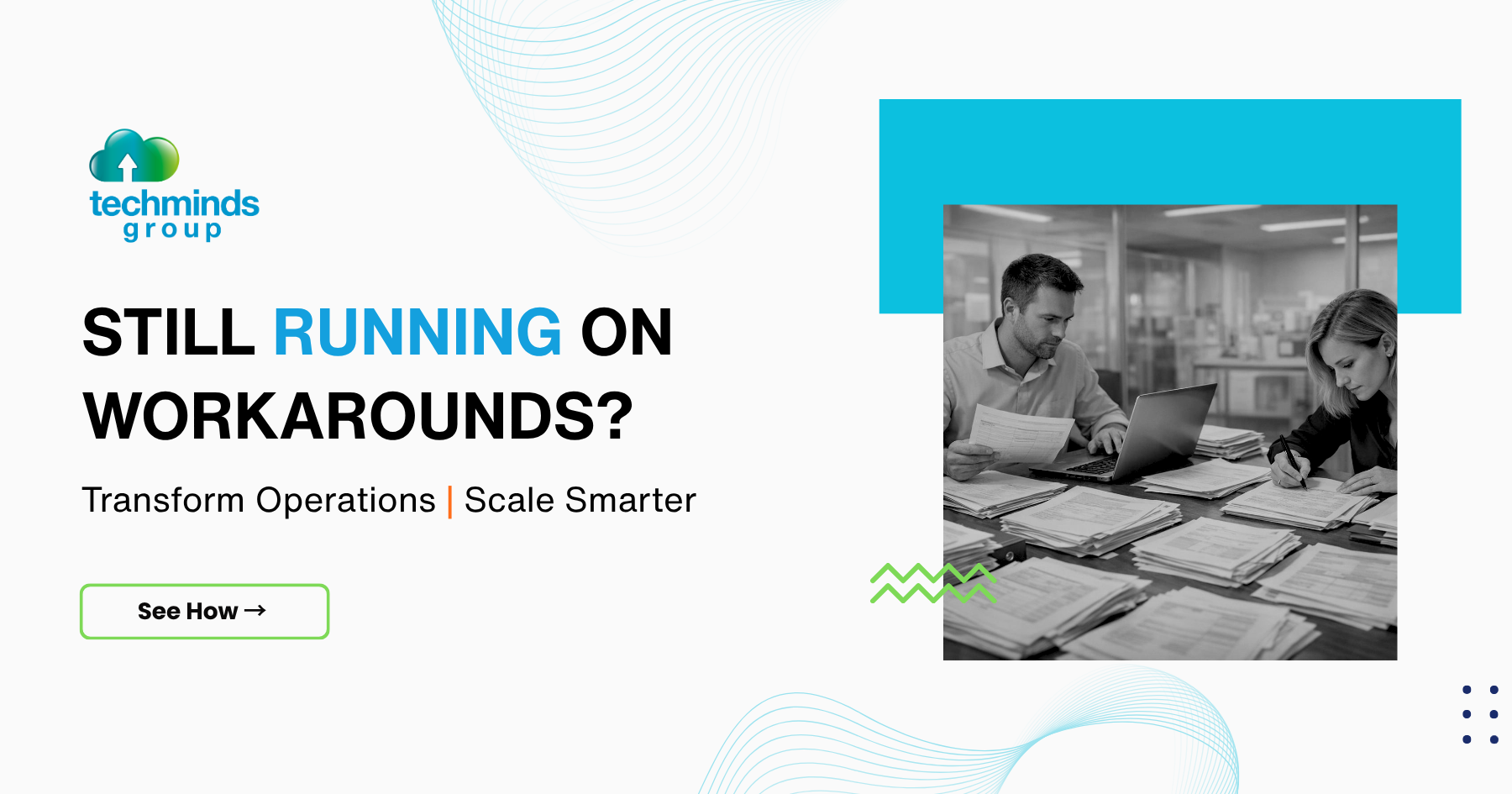
Operational data lives in multiple places: production schedules in one system, inventory in another, financial records in a third, compliance documentation in spreadsheets and binders. These are periodically reconciled — a process that consumes significant staff time and generates errors.
Compliance is managed as a parallel process: HACCP records are completed on paper and entered later. Sanitation logs are in binders. Vendor certifications are tracked in a spreadsheet that is updated irregularly. Audit preparation is a dedicated project that occurs before scheduled audits.
Financial visibility is delayed: cost of goods cannot be calculated from production data until the end of the accounting period, because the production data and financial data are not connected. Product-level profitability requires manual assembly of data from multiple sources.
Growth creates operational stress: each new account, each new product line, and each new facility adds complexity that is absorbed by adding manual steps and people — not by expanding system capacity.
The Transition — What the Implementation Process Involves
The implementation process for a protein or seafood manufacturer transitioning to a connected operational system is a structured, sequenced project — not a disruptive overhaul.
The sequence: operational assessment → configuration of a pre-built food manufacturing foundation → data migration → parallel operation → phased go-live → post-go-live optimization.
The most significant transition activities for a protein operation are: Data migration: Moving lot records, inventory positions, supplier data, and customer information into the new system. The quality of the source data determines the effort required here. Well-maintained data migrates cleanly; inconsistent data requires clean-up work.
Staff training: The operational system is only as effective as the staff who use it. Training focuses on the specific workflows that change — receiving with scale integration, production with lot linkage, compliance with system-generated records — not on general system orientation.
Parallel operation: Running old and new systems simultaneously until the new system’s outputs are confirmed to be accurate. This is the critical validation step — it ensures that go-live is not a leap of faith.
The After State — What Operational Transformation Delivers
The after state in a protein or seafood operation with connected operational systems has consistent characteristics:
A single source of truth: Production, inventory, compliance, and financial data exist in one connected system. The inventory number that operations sees is the same inventory number that finance sees. The lot record that compliance uses for audit documentation is the same lot record that production uses for scheduling.
Compliance as a default state: HACCP monitoring records are generated at the point of the monitoring check — in the system, in real time. Sanitation completion is recorded as it occurs and linked to the next production run. Vendor certifications are stored in the system with automated expiration alerts. Audit readiness is not a state that is prepared for — it is the default state of the operation.
Financial visibility at the transaction level: When a production run completes, the system calculates the actual cost of goods from actual raw material consumption, actual labor, and actual yield — not standard estimates. Product-level profitability is always current.
Lot traceability on demand: A complete forward-and-backward lot trace is a system query that returns results in seconds — not a manual process that takes hours. Recall readiness is built in.
Scalability without proportional overhead: Adding a new product line, a new storage location, or a new customer account with complex compliance requirements is handled within the existing system — not by adding manual processes or hiring people to manage workarounds.
What Transformation Is Not
Operational transformation in protein manufacturing is not:
A technology project managed by IT: The outcome of an operational transformation is measured in operational and financial metrics — waste reduction, inventory accuracy, compliance audit outcomes, margin visibility. It is an operational initiative that happens to involve technology.
A one-time event: The implementation go-live is the beginning of the operational capability, not the completion of the project. The value of a connected operational system increases over time as staff become more proficient, as more data accumulates, and as the system’s capabilities are more fully utilized.
A replacement for operational expertise: The system does not make operational decisions. It provides the data and workflow structure that enables better operational decisions by the people who understand the business.
A solution to every operational problem: A connected operational system addresses the structural problems that come from disconnected data and manual workflows. Operational problems that exist for other reasons — process design, staffing, supplier quality — require their own solutions.
Techminds Group specializes in operational transformation for protein and seafood manufacturers — with a delivery methodology designed for food manufacturing sensitivity and a pre-configured foundation that reduces implementation risk.
A 15-minute conversation at https://techmindsllc.com/operational-visibility-for-food-and-protein-manufacturers/ is a practical starting point.